
Weekly Musing 02.24.26
A letter from the future, SOTUS on tariffs, AMD's $100M deal with Meta, GPU rental prices increasing, GDP disappoints

⏮️ LOOKING BACK
Markets at a glance
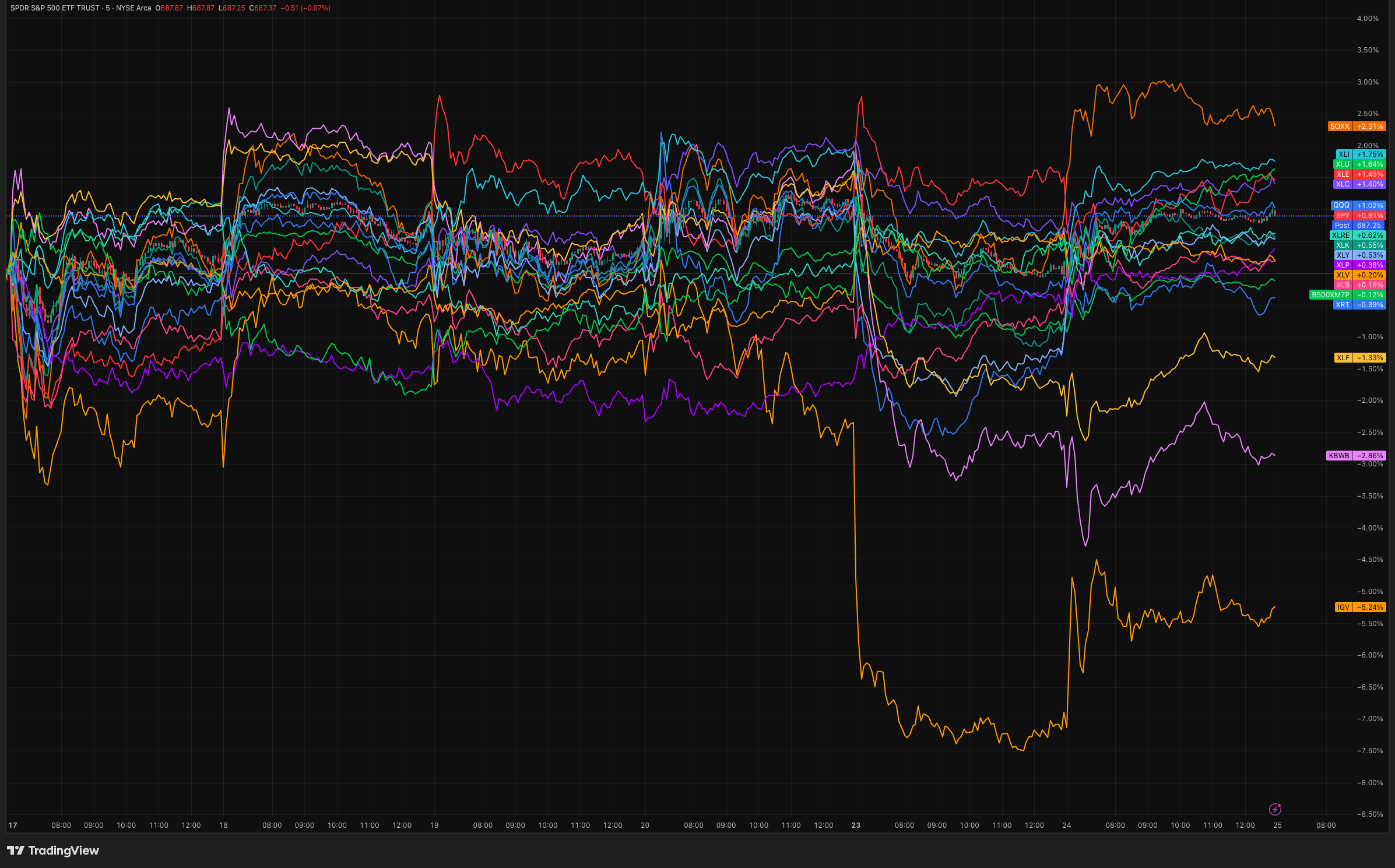
Software (IGV) and financials (XLF, KBWB) both lagged the overall market.
Financials were added to the list of sectors facing AI disruption risk. An AI-enabled wealth management platform (Altruist) announced AI-powered tax planning. If any industry is ripe for disruption, it’s wealth management. They overcharge and underdeliver.
Over this past weekend, a thought-provoking article from Citrini Research fueled an early week selloff on AI-sensitive sectors (more on this later).
More AI disruption risks = gains for semiconductors. SOXX outperformed as markets start to reverse course on the AI bubble narrative. Nvidia earnings is the big thing to watch this week.
A letter from the future
Citrini Research wrote a unique memo from the year 2028, providing a commentary over what has “happened” over the last few years since AI took off in 2026. It’s a great read and I highly recommend it. But it’s only a thought experiment, and there is a lot to debate.

The biggest theme was the decimation of white collar employment and how that bleeds over to the rest of the economy:
The whole mortgage industry is predicated on reliable streams of steady income from prime credit borrowers. That falls apart if white collar workers aren’t earnings the same levels anymore.
The highest consuming cohort drives a big part of our economy. Without that consumption, the unemployment contagion spreads to the service economy.
Government tax receipts fall, launching us into a fiscal crisis. Citrini proposes that we’ll need to restructure the tax code.
I’ll be honest, reading this article was unsettling. And I do think that there will be whole jobs that will change. The speed of the transition itself could be short-term disruptive.
But my biggest criticism of the article is the lack of imagination. Everyone has just been given super human capabilities. They underestimate the ability for people to adapt. The nature of work will evolve, just as it has before. The size of companies will reduce, but we will have more companies. Entrepreneurship will boom as smaller companies thrive because they can serve more niches economically.
As with most transformative technological changes, the structure of the economy will change. That’s my hope at least. 😅
SOTUS struck down the Trump Tariffs
But it might not matter. The Trump administration still has a handful of other tools to influence trade (4 powers summarized in the tweet below).

And in the chaos of the last year, the world woke up to its structural vulnerabilities (Europe’s lack of defense, US’s lack of industrial capacity, China’s lack of domestic consumption). I don’t think we are going back to the old world order.
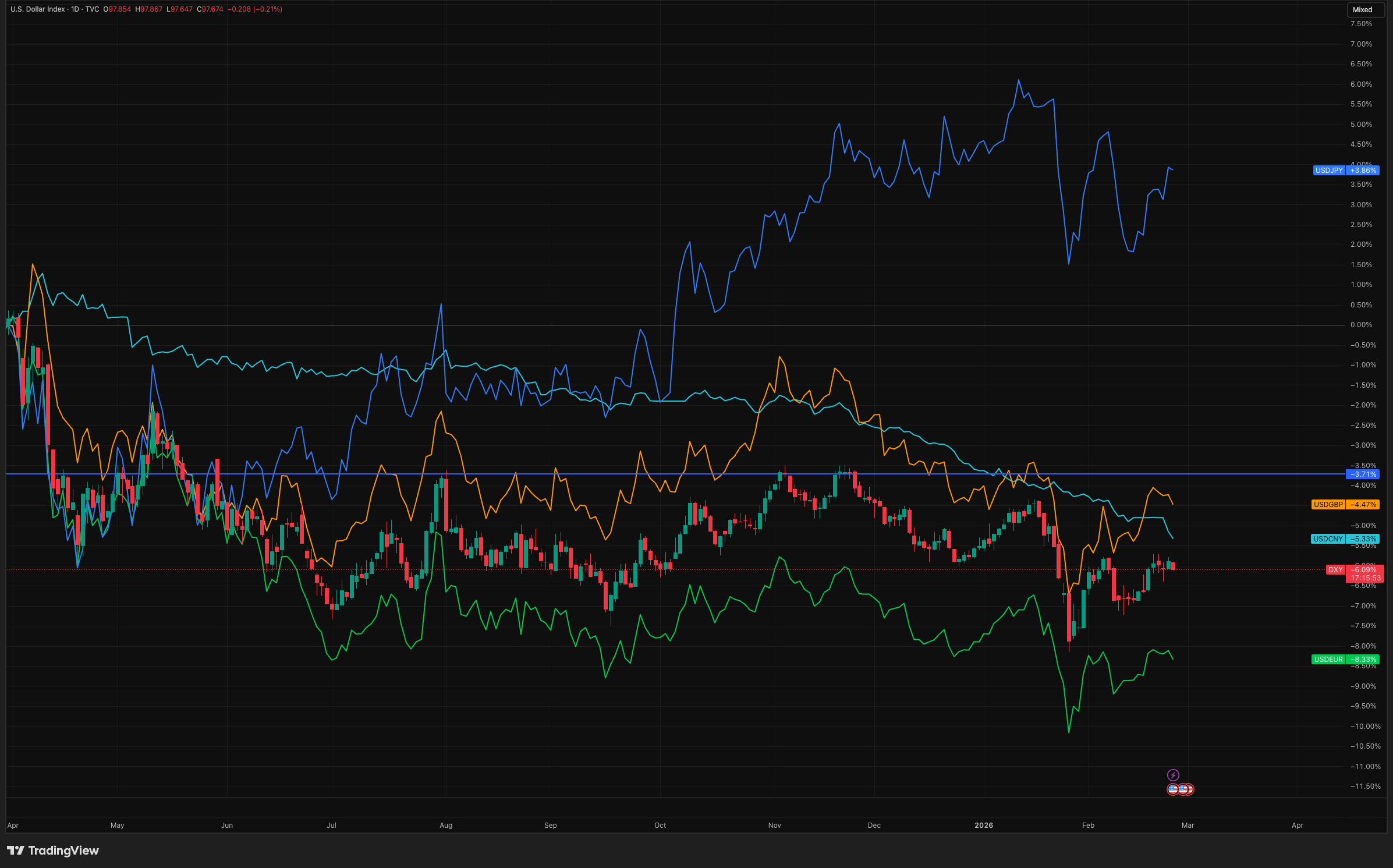
Ultimately, I think this whole saga was motivated by currency. The US wanted to reindustrialize and you can’t do that with a strong currency. To that end, it’s worked. The dollar (DXY) weakened, while most major currencies strengthened (which is especially bad for China).
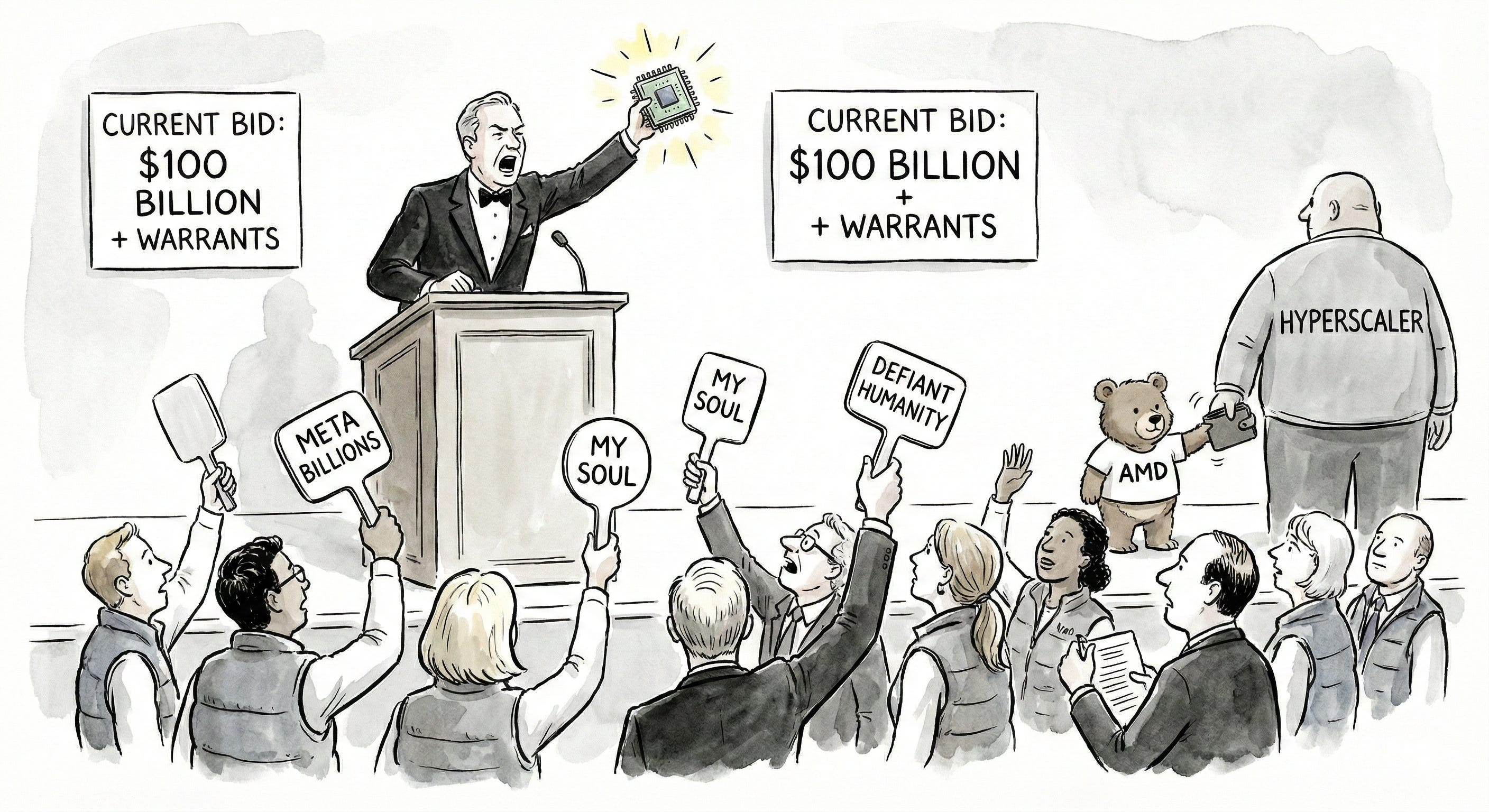
AMD and Meta announced $100B deal
Meta has agreed to buy 6GW of AMD AI racks over the next 5 years, with the first GW coming later this year. The catch? AMD issued warrants to Meta that vest up to $600 per share, amounting to ~10% of AMD. This is the same structure underpinning the OpenAI deal AMD announced last year.
It’s essentially a rebate to Meta on its purchase of AMD’s chips. The warrants vest as AMD’s stock price goes up, so there is a mutual incentive for AMD to be successful. But if the warrants become worthless, Meta may not follow through with future purchases.
AMD is playing a high risk, high reward game. They need large hyperscalers to adopt and seed the ecosystem for their chips. If successful, the reward is big.
One interesting quirk with this deal: Meta is using a customized version of AMD’s MI450 GPUs. This is enabled by AMD’s chiplet design (a modular architecture that can be modified). It’s a unique value proposition for hyperscalers who need specialized compute for specific workloads. It’s an alternative path to going full custom chips, which is difficult and expensive.
Side note: I wrote about AMD’s latest earnings here.

Older GPUs rental prices are up!
Like I’ve said in past posts, we hit another ChatGPT moment with Anthropic’s Claude Code. Token consumption is skyrocketing, driving up demand for GPUs. The rise in H100 prices directly counters the depreciation risk narrative we heard all of last year. This should be a redemption for a few battered companies. See my personal portfolio update below for more. 😉


Macro: A double whammy of slow economic growth and rising inflation
But the data is messy once again.
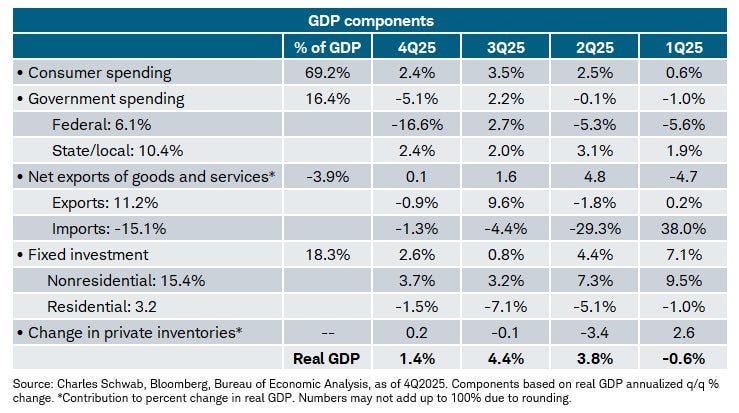
Q4 GDP growth +1.4% (q/q annualized) vs. +2.8% est. & +4.4% prior
The government shutdown last year was a big headwind.
Notably, consumer spending was also lower vs. Q3, which is atypical given holidays
The 2025 numbers in general were very lumpy, but overall the 2025 decelerated vs. 2024. +2.2% in 2025 vs. +2.8% in 2024. Government spending had a lot to do with it.
December PCE Price Index +3% y/y vs. +2.9% est. & +2.8% prior
⏭️ LOOKING FORWARD
Earnings
Semis: Nvidia is the big one
Software: Snowflake, Salesforce (looking for any signs of growth acceleration)
Neoclouds: Coreweave (I’m watching to see if they can deliver new capacity on time)
Macro
January PPI (Producer Price Index) on Friday. This is inflation for domestic producers. It’s been cool for the last few months. Let’s see if it continues to stay that way.
